I remember the day it happened like it was yesterday. I was comfortably settled with a new book, eager to dive into the story, but the words just wouldn't come into focus. It was blurry, indistinct, and incredibly frustrating. That's when I realized I was probably experiencing the dreaded need for reading glasses. It felt like a rite of passage into… well, let's just say a slightly older age bracket. If you're experiencing similar issues, you're definitely not alone. Let me share my journey and what I've learned about dealing with this common vision change.
I'd always prided myself on having good eyesight. Suddenly, around the time I turned 40, things started to change. It wasn't a gradual shift; it felt like an overnight transformation. One day I could read the fine print, the next, I was squinting and holding things at arm's length. It was incredibly frustrating, especially since I enjoy reading and spending time on my computer. I felt like I was losing a part of my independence.
I remember talking to my friend Sarah about it. She mentioned that she had a similar experience right after turning 40 as well. It seems like the big 4-0 can bring more than just birthday cake! It was comforting to know I wasn't the only one experiencing this. Another friend, Mark, who is nearing 60, even bragged that he still doesn't need reading glasses. He showed me he could read the tiny print on a prescription bottle, just to prove his point. I was a little jealous, to be honest!
My first trip to the eye doctor wasn't the best. I went in thinking I just needed an updated contact lens prescription. The doctor informed me that I needed reading glasses. I felt a bit sensitive about it, and the doctor's less-than-sympathetic attitude didn't help. I decided to find a new eye doctor who was more understanding. It's important to find a professional who listens to your concerns and makes you feel comfortable.
After getting my prescription, I started exploring different types of reading glasses. I initially tried bifocals, but I didn't like the distinct line in the lens. Then I discovered progressives. Progressive lenses are much better for me. They have a smooth transition between different focal lengths. The top part is clear for distance vision, the middle is perfect for computer work, and the bottom is for reading books or using my phone. This design works much better for my daily activities.
I also wanted something lightweight and stylish, so I started looking online. That's when I came across Mozaer's homepage. I found a pair of reading glasses that seemed perfect for my needs. I was looking for some stylish and functional reading glasses.
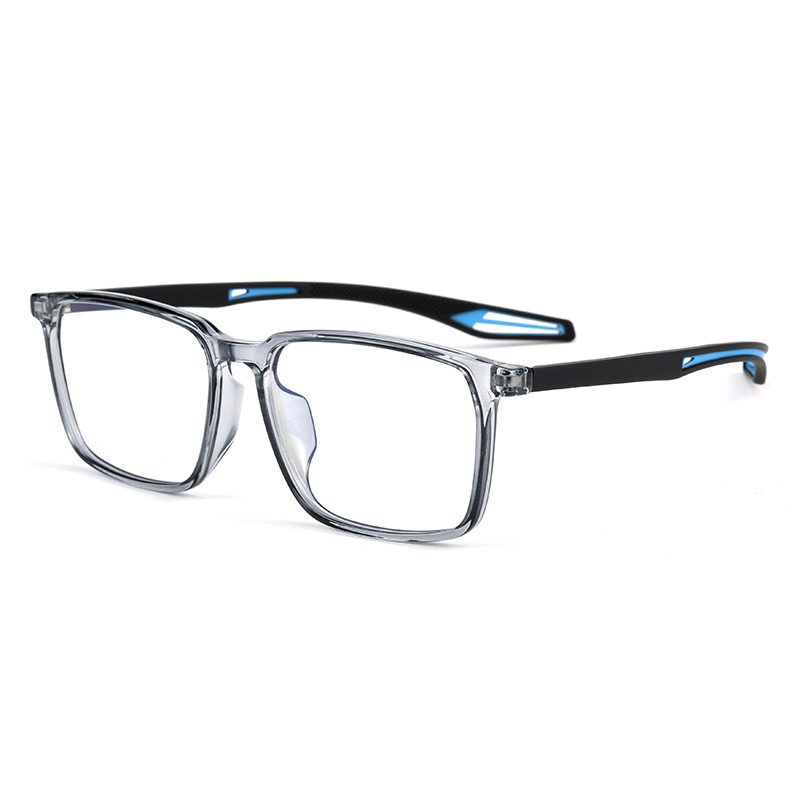
I decided to try the RBENN Square Anti Blue Light Reading Glasses from Mozaer. I was particularly drawn to the anti-blue light feature, as I spend a lot of time staring at screens. The TR90 frame also seemed incredibly lightweight and comfortable. I ordered a pair with +1.75 magnification, which seemed like the right strength for me. I was pleasantly surprised by how comfortable and lightweight they are. The anti-blue light feature really helps reduce eye strain when I'm working on my computer for long periods. They're also stylish enough to wear out and about. I liked the square design, and the photochromic lenses are a nice touch. They automatically adjust to the light, which is great when I'm transitioning between indoors and outdoors.
Based on my experience, here are some practical tips for choosing the right reading glasses:
The need for reading glasses is usually caused by a condition called presbyopia. It's a natural part of aging that affects the lens of your eye. As you get older, the lens becomes less flexible, making it harder to focus on near objects. While it can be frustrating, it's a very common condition that affects most people over the age of 40.